Bolstering my faith

(A much more cheery post than the last.)

I am reflecting on the comments of my book champion (God bless her) who got ‘The Selkies of Scoresby Nab’ onto the Times/Chicken House Children’s Fiction long-list for 2012

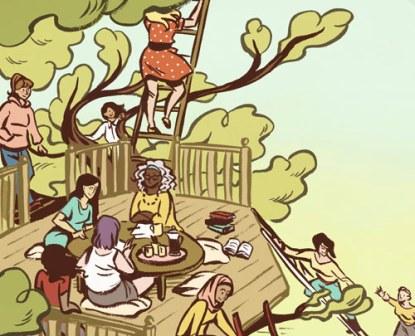
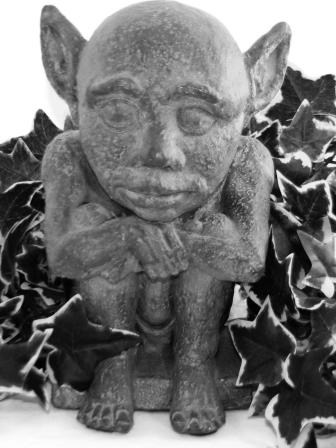
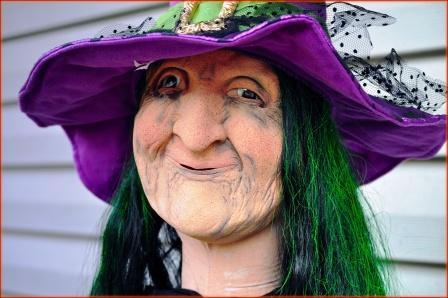
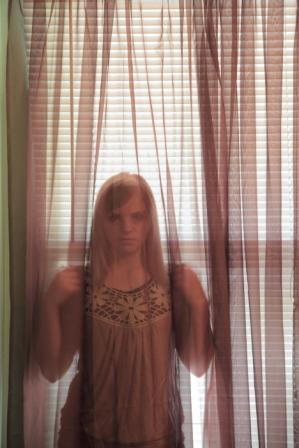
How I imagine a book champion might look.

Reasons to be cheerful - what the reader said that validated my writing:

  • well-written and movingthe MA was well worth it, then
  • narrative voice is incredibly strong - jump and down with delight – isn’t that what everyone say they want from a writer?
  • a convincing Northern dialectwell, it is pretty much my own 
  • distinctive and attractive sense of place and periodI spent a lot of time there and then imaginatively at least – you won’t quite find Scoresby on a map
  • Mattie undergoes a true journey of self-discovery, finding out not only who and what he is, but also what he is made of. The story has told itself well then – and that’s what makes it ‘moving’. I still can’t read a certain bit without sniffling.

Points to ponder - I’m not sure yet where these will lead me – here are some immediate thoughts:

  • The lyrical, poetic quality of the writing and story may work better for girl readersI am deeply uncomfortable with the idea of gendered books. 
  • With this in mind, it may be worth considering if Mattie could perhaps work better as a girl – although that could have too much of a knock-on effect on other plot points, and the relationships/friendships. She is so right about the consequences of such a change. He has been Mattie Henshaw, complete with name, from the off. I did try doing a girl version at one point – but it felt wrong. Mmmm.
  • Does the period-feel work for a contemporary reader? The current challenges of selling period fiction in the children’s market would need to be considered. Sorry, but that’s not my problem. I can no more write contemporary fiction than fly. Besides, what about the sales of steampunk & gas-lamp fantasy?
  • Is the story and the writing unique enough? Now that’s a biggie.
Final thoughts
  • She usedcharmingtwice – aaargh – I shall have to get grittier!
  • I really love the feel, pace and detail in this manuscript. - I could hug her.
  • The author can really write. Huzzah!
So all-in-all with all those lovely things said, I’m slightly at a loss how 

there might be possible scope for working editorially with the author to make this book the best it can be.

Ah well. I’m always up for developing my skills.

Let’s see what I can do with ‘Georgiana and the Municipal Moon‘ at The Golden Egg Academy 23rd & 24th March, then.


The Next Big Thing

Thanks to Jo Wyton for tagging me!

What is the working title of your book? 

The Selkies of Scoresby Nab.

Where did the idea come from for the book? 

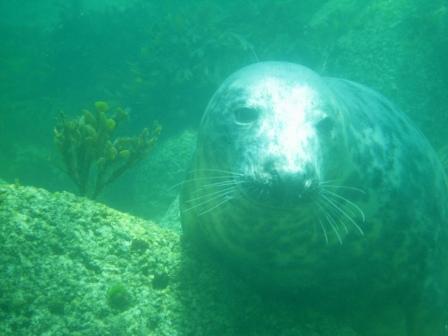
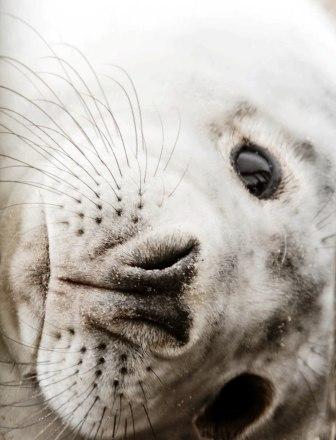
I’m a scuba diver and one of the most magical things I’ve ever done was diving with seals. This rekindled my love for the Selkie legends – although I’d never come across one from Yorkshire. So I decided to create one. I used the viewpoint of a boy whose mother was a seal  - but who did not know.

What genre does your book fall under?

It’s a children’s historical fantasy. (It makes me feel ancient to call the Sixties history – but they are to ten-year-olds!)

Which actors would you choose to play your characters in a film version? 

I think it would be have to be animated. I’d love actors with convincing Yorkshire accents to do the voice overs, mind you. Dame Judi Dench would do a fine Grandma and Sir Patrick Stewart, Granddad. But the central younger characters would be better off as complete unknowns.

What is a one-sentence synopsis of your book? 

When troublesome Mattie Henshaw is sent to his grandparents’ house on Scoresby Nab, he doesn’t expect to discover a sea-going family he never knew he had, or to have to save them from slaughter.

Will your book be self-published or represented by an agency? 

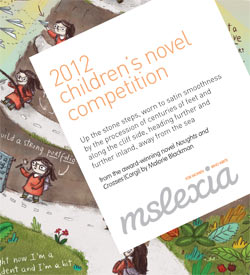
I don’t have an agent – yet. It has been long-listed for the Mslexia Children’s Novel Competition 2012, though.

How long did it take you to write the first draft of your manuscript? 

I wrote the first draft as the main work in my MA in Creative Writing from West Dean College which I finished in one year ( 2011)

What other books would you compare this story to within your genre?

I think it’s unique. It has a distinct Northern voice – so you might be reminded of David Almond‘ s writing or ‘Kes’, and there are magical parts that might make you think of Katherine Langrish‘s work or Pat Walsh‘s.

Who inspired you to write this book? 

My amazing taskmaster of an MA tutor, Greg Mosse ( yes, he is husband to Kate Mosse) and way back in history, my old English mistress, Miss Grey – who believed in me.

What else about your book might pique the reader’s interest? 

If they have ever wanted to swim like a seal , or enjoyed the magic of the sea, then this is a book for them.

NOTE

Please?

I haven’t got anyone else to tag – would you like a go? Please?

Good things come in threes, too.

Number One
I’m off to Chi-Scbwi tonight, thanks to a lift from my good friend, Kathryn Evans. Several times a year a bunch of us local writers and artists get together and have a chinwag. It’s great – we are all at different ages and stages – and we support each other as only creative types can! ( make of that what you will)
Number Two
I have finished the first draft of Georgiana and the Municipal Moon (working title) today. 86k all told – a lot of which is piffle – but now I can have my own NaNoEdMo, if you see what I mean.
Number Three
My MA novel,  The Selkies of Scoresby Nab, has been long-listed for the Mslexia Children’s Novel Competition. Hoorah!

It’s not me. Honest.

Storming the Citadel

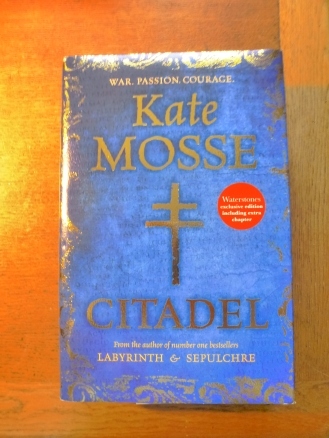
Last night I went to Chichester’s rather lovely Assembly Rooms to listen to Kate Mosse talk about her intriguing new novel, Citadel. I had downloaded and read the beginning ,quite legitimately, I might add, and thought it might well suit my husband. We had been to Carcassonne,  and seen many of the streets in the Bastide which I knew were significant.

A delightful chap from the local Waterstones gave a preamble mentioning the many Kates – all facets of this inspiring and multi-talented woman. Her mother spoke up for Kate the Daughter – which caused a ripple of laughter. He also mentioned her previous titles but forgot ‘The Winter Ghosts’. A copy fell down shortly after. More amusement.

Through careful questioning by her husband, Greg, she took us through the stages taken to reach the finished work. I was pleased when she said ‘Sometimes the characters are not who you think they are’ and went onto explain how they emerge and assert their own traits. How many other writers have experienced this, I wonder?

It was fascinating, if humbling as a writer, to hear about her punishing work schedule. Up at three – coffee – write – jog – eat a little – write some more and so on… She deserves every success with effort like that. Especially when you consider that her beloved father died during the writing of this book.

The shadow of real life on every page of the draft .

Those who have read any of  Kate’s previous works will know how much the spirit of place informs what she does (another notion I aspire to). She spoke of the ‘shadows that you still feel in Carcassonne’ and how the events of 1942 can decide which cafe a person frequents in 2012. There were some deeply moving anecdotes – and in a strange way, it was good to see that these still affected her, despite all the research. She has not lost the emotional connection with the Languedoc over her 23 years of work.

She clearly knows her stuff, yet self-effacingly prefaces detailed facts with ‘As I am sure many of you will know…’ I also cannot help but warm to a woman who admits that ‘novelists are shockingly nosey and inveterate liars’. She is a great smiler and does not take herself too seriously.

For me, the fact that she wanted to tell the hidden history of women and commemorate the ordinary people who couldn’t turn a blind eye,  was appeal enough – but there had to be more before I would get it for my husband. It came with her enthusiasm for adventure stories: H. Rider Haggard and the like:

I like big juicy novels.

And when she said ‘Really, it’s girls with guns,’ and  ’It’s all about that action!’ I just knew it would fit the bill. As a Sussex man, he would also appreciate the value for money of 700 pages.

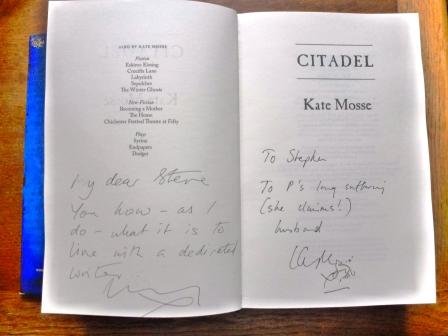
So I coughed up and had it signed by both Kate – and Greg. As one of Greg’s MA graduates, I was privileged to be invited to the after-party at Amelie & friends, which was a lovely mixed, inclusive event ( with rather nice olives too). Kate gave an emotional  thank-you speech stood on a chair. I will not forget the deep affection expressed there for her husband and his support. I will always treasure this book as a symbol of the kindness I get from mine.

The Case of the Invisible Girls

This is a very simple post addressed to fellow writers, illustrators and publishers especially for younger children.

Where are all the girls?

photo by katiek2

Seriously.

I looked in ‘Carousel’ – these are my stats for the Spring 2012 edition.

  • Babies Books: 9 books reviewed , 2 male central characters & 7 neutral.
  • Toddlers: 8 books reviewed, 5 male central characters, 1 female and 2 neutral
  • Picture Books: 15 reviewed, 8 male central characters, 5 female and 2 neutral
  • First Steps: 8 books reviewed, 6 male central characters, 1 female and 1 neutral
  • Reading Alone: 14 reviews, 5 male central characters, 4 female & 5 neutral
  • Reading with Confidence: 13 reviews, 5 male leads, 6 female & 2 neutral
Out of 67 books, 31 had male leads, 19 had either a neutral or an equal balance, and only 17 had female central characters. That gives 46% male (OK) 28% neither/both & 25% female. Take out the books that had an equal ratio or featured neither and this remains:

65% male to 35% female central characters

Now I have no wish to criticise ‘Carousel’ – it reports what there is – and it might be just a statistical blip. So I thought I’d better cross-check with Amazon.

I won’t bore you with the full breakdown but here’s a summary:

  • out of the top 30 best-sellers from 0-8, 14 featured male characters, 11 were neutral or balanced, and 5 had female leads.
  • 47% male, 37 % neutral & 16% female
  • 74% male to 26% female (if you take out the neutral books)
I did the same with ‘The Book People’:
  • out of the 60  Top Ten books promoted in ranges from Babies through to 9+, 32 featured male central characters, 14 were neutral & 14 female
  • 70% versus 30%
What on earth is going on?

Photograph by D Sharon Pruitt

To my shame, this is a rough transcript of a conversation betwen me and an agent for children’s writers.
‘I’m stuck – need to choose between a boy or a girl as my  central character in my 9+ fantasy adventure – which would you suggest?’
‘Well, if you really can’t choose any other way, then the boy commercially speaking.’
‘Oh. Why?’
‘Girls will read books with a boy central character- but boys won’t read it if it’s a girl.‘ ( my emphasis)

by youleah

So all my readers that have anything to do with books – what on earth do we do about this?

Them bones, them bones…

This week I have been working on the underlying structure of my work-in-progress (provisionally called ‘Georgiana and the Municipal Moon’).  I’d be dishonest if I didn’t remark on how much there is to think about.

It’s set in an alternative Regency England – but I want consistency so I’m using the years 1808/9 for days of the week , phases of the moon and tides. Even though I’ve dreamt up the City of Selchester, I do want my Sussex geography to be feasible (magic notwithstanding) and the details of everyday life to be convincingly Georgian. Research into where and when and how can throw up no end of plot possibilities - and problems.

Regency Ladies by O. Benson

Then there’s the question of scenes and chapters. Each one must add something to the plot and the reader’s understanding of the characters as well as having a crescendo. Why would you read on if the scene isn’t going somewhere?

So I’ve been happily imagining what the exit point of each scene might be. Sometimes it’s a steady build-up, in others, a different strand comes to interrupt the flow and forms the climax. All good stuff – it’s taken four rough drafts to get this far.

One thing I’ve tried this time is working backwards. It sounds odd, and it is a brain-strain, but it does make sure everything pays off.

Here’s a ‘frinstance’:

I knew I needed a particular character to successfully forge a signature on a document. By tracing that in reverse, I could put in an earlier moment where they are praised for their handwriting (much to another character’s disgust) and and even earlier incident where someone who might spot the forgery is shown to be unlikely to. The difficult bit is making this none-too-obvious: lots of head-scratching and the use of distraction were needed.

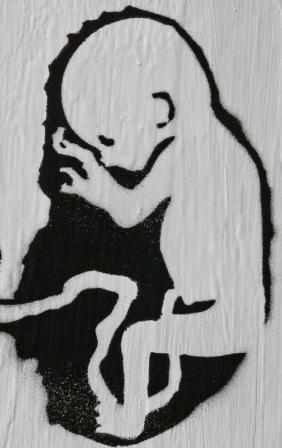
So now ( version 5) I have a dirty great long sequence of discrete episodes grouped into chapters. There are some gaps with notes like Her experience at school will be largely unpleasant – but by-and-large, it is done. My foetus has vertebrae.

Image by Leo Reynolds

How do you tackle the spine of your work?

Reading material

This post owes its parentage to Vanessa Harbour on ‘The importance of reading as a writer’ and Maureen Lynas’s writing about an approach to structure. I thank them both for getting me thinking about what I read and how it affects my writing.

One notable feature of the MA at West Dean was the challenge of reading in new genres. Without that I would never have discovered the emotional intensity of ‘A Quiet Belief in Angels’ by  R. J. Ellory  or to be honest ,the complex and satisfying structures used by Agatha Christie & Ngaio Marsh. I didn’t ‘do’ crime fiction before. It’s taught me to be an even wider ranging reader.

Now I enjoy being sent books by Vivienne Da Costa for Serendipity Reviews. There are joys like the sheer delight of seeing a much-liked author Chris Priestley come into his own – really using his deep knowledge  to create ‘Mister Creecher’. Or the pleasure of reviewing a colleague’s debut novel like ‘Slated’ by Teri Terry.

I am sent different age-ranges and genres – this helps me to see what I admire, and also what I don’t want to write.

Greg Mosse insists students understand that it’s not what we like in a Reading-Group-glass-of-wine-and-nibbles way that matters, but what works. To my family’s annoyance during the MA year I couldn’t watch anything without taking it apart to see the gears and cogs. I keep quiet now – but I’m still anatomising in my head.

And yet…

It’s not just that, however useful. It’s about inspiration. The things that make me want to write.

This will sound cringeworthy but it is true: I want to pay it forward.

I want to take readers to new worlds.

I loved Narnia and Earthsea and Pern and Middle Earth ( yes I know -it’s our world millenia ago). How wonderful to transport other people somewhere special.

I want to speak with my own voice.

I can hear writers like David Almond and Robert Westall, and Leon Garfield and Joan Aiken. They taught me I can be myself, Northern vowels and all. That you can use language to give flavour and identity. I want to share that.

I want to revel in reworked tradition.

I think of Alan Garner, George Mackay Brown Lloyd Alexander, Susan Cooper and nowadays Katherine Langrish, Jackie Morris and Pat Walsh. They develop shared folklore, myth and legend and keep it alive. It’s too good not to pass on.

I want to express my delight in transformation.

Books move me far more than cinema or TV, they always have done. I can never forget the change in Mary Lennox in ‘The Secret Garden’, or Eustace Clarence Scrubb in ‘The Voyage of the Dawn Treader’. And I’m still a soppy date about Scrooge & Silas Marner. Who wouldn’t want to show what people can become?

So, in short, I think you have to read and read and read  to be even a halfway decent writer. Or at least I do.

How about you?


Get over yourself

Yesterday I made a complete fool of myself. In public. In front of people whose good opinion I deeply desire and those I am supposed to be helping.#epicfail

I had to take part in a mock interview with a much-respected colleague as a demo for newer MA students. I was simply supposed to speak about my work-in-progress.

I really struggle to tell a story in mid-field, as it were. I can give you the grand sweeping overview – girl with magical powers has to choose between saving her mother or saving her city – or the close-up detail - Georgiana plays knucklebones with her friends the Blewcoat Boys. Anything inbetween I still find appallingly difficult. Before I’ve even opened my lips, what I have to say sounds so lame, I just dry up. And when I do venture something, it’s just plain wrong: not what I was asked to do.

So humiliating.

Those around me could not have been more supportive. No-one tried to make me feel pathetic – I was surrounded by encouragement.

But I still couldn’t do it.

Having been told it was both easy and an essential skill didn’t really help. Nor having it demonstrated with admirable skill by others. Currently, I feel an utter failure with no future in writing.

I know. Ridiculous. But it is how I feel amongst the tears.

But I’m still carrying on. I watch my friends stream ahead of me with book deals and agents and distinctions and just plain skill. I just crawl a bit further.

Give me a wave when you pass.


The view from the Big House

My bedroom window at West Dean College

An account of what I found useful as a writer for young readers at the 5th Chichester Writing Festival

Our first session focused on the experience of having work translated from Book to Film- a not too uncommon experience for some children’s writers. The key point was that adaptation has to embody the spirit of the book – not seek to replicate it slavishly. I found during the MA that retelling my story through drama helped me focus on what was key to my story. This approach might help with summarising for a synopsis, or honing your pitch.

Interestingly for me, some common themes cropped up in both the New Novelists and Poetry sessions. There was a good deal of debate about social media and other ways of reaching your readership. As was pointed out by Greg Mosse in the Writing for Children panel, that’s a normal thing for them. My take is that engaging with buyers and readers ( who are not necessarily the same people) is fruitful for both parties. Performance poetry develops more passion when people respond – and our readers engage more fully with reading when they relate to the author just the same as any reading group. This is a far more encouraging way of looking at interaction than as a cynical marketing exercise.

You might not think that the crime writer Mark Billingham would be that relevant to a writer for young people – but his account of learning to trust his readers, to allow them to create much of the story in their own heads stayed with me. Good advice for any writer, and for us, it avoids that awful pitfall of patronising our readers. More of that later.

Saturday found two sessions on Fiction and Non-Fiction. In both cases, the balance between making it up and rearranging the facts to create a better narrative was a matter of much discussion. Finally, it’s down to the writer’s integrity and judgement. That is no different in our world – though perhaps the debate over ‘bad’ language brings it more into focus.

Certainly what publishers and agents want outlined in the seventh session, is pretty much the same regardless of age written for –  a typescript bursting with truth and a committed passionate author to go with it.

‘A good agent or publisher can help a writer to think big.’ Felicity Bryan


Having paid for it (as a true Yorkshire woman) I went to the Military History discussion. I knew from previous conferences that the session you least relish can provide surprising insights – and I am always scared I might miss something. Here what struck me was that despite the apparent need for technical accuracy, it was the human responses that meant most. Truth to the experience was essential – and that the senses conveyed this best.

Many writers for young people are Inspired by History. An amusing  point from this panel for me was made by Jason Goodwin  - he spoke of ‘smuggling information through the entertainment’. I think this is a good approach to avoid ‘infodumps’ in any genre.

Joanna Trollope spoke on Saturday evening to a packed Sussex Barn. She exhorted us to

trust to the power of the unconscious mind.

Her focus has always been on the human drama – and we all know if your reader doesn’t engage with the central character then nothing else matters. She was surprisingly hard on her younger self – saying she had lacked courage. I felt I must resolve to dig deeper.

Sunday’s after breakfast panel looked at New Publishing: I’d say writers for young people need to be aware of the changes and to utilise them as our readership will. Again it comes down to that interaction idea – and that there are new and developing ways now. (You might want to look at Alison Baverstock’s The Naked Author on this subject)

Last, but oh so definitely not least, we had Sally Kindberg, Bridget Strevens and David Whitley. One remarkable and emblematic feature for me was just how much more literally colourful we writers/illustrators for young people are. Francesca Simon picked up a similar yet deeper point: if you want creativity and passion, read children’s lit. She made it quite clear she felt that some adult authors were missing out by ignoring our wealth of approaches and subjects.

I so much admired how hard these panellists tried not to talk down to the people holding their books. They all wanted to provide the best possible, not some watered-down pallid version of adult writing or art.

Finally, the theme of all this for me was that there is no ‘Great Divide’ between writing  for young people and adults. It’s a  continuum in which many things apply across the whole range. Truth to the narrative, considered application of technique and engagement with your readership are the same regardless of the age catered for.

So I’d recommend this to any of my SCBWI colleagues – and anyone interested in any form of writing precisely because the focus is on writing as a craft. Professionalism is the same for all.

 I would expect the Sixth Chichester Writing Festival to be in September 2013 – it will be worth going.


The Ambridge Delusion

The long-running serial ‘The Archers’ works best when it creates illusion of being there. The writers make the audience almost believe they are overhearing something as it occurs.How do they achieve this sense of immediacy?

First off, there is no prefiguring: no-one announces what will occur in the future. They cannot possibly know, so they don’t foretell. This applies well to a novel too.

Secondly, there is little back story. OK , sometimes a newly-arrived character will be brought up to speed – but that kind of exposition can be clumsy even in experienced hands. Best not to have ‘As you know…’ dialogue, then.

Thirdly, there are rarely more than two characters interacting in any one scene. There’s no confusion that way. This seems a reasonable idea to pursue, in dialogue especially – no problems with attribution then.

Furthermore, characters are created by layering. Habitual Archers listeners will have heard many different aspects of the regulars over the years – but only one at a time. We compose our view of the characters out of the evidence we’ve been given.

It cracks on because there is only dialogue and implied action. Nobody wastes time reflecting and informing you what they are thinking – you have to work it out.

Finally, there’s no voice-over. No busy-body author telling you what to think or describing the scene in boring detail – that’s left to a few choice sound effects and your imagination.

All-in-all, not a bad way to think about keeping it apparently real.