
I acknowledge my debt to Lord Byron

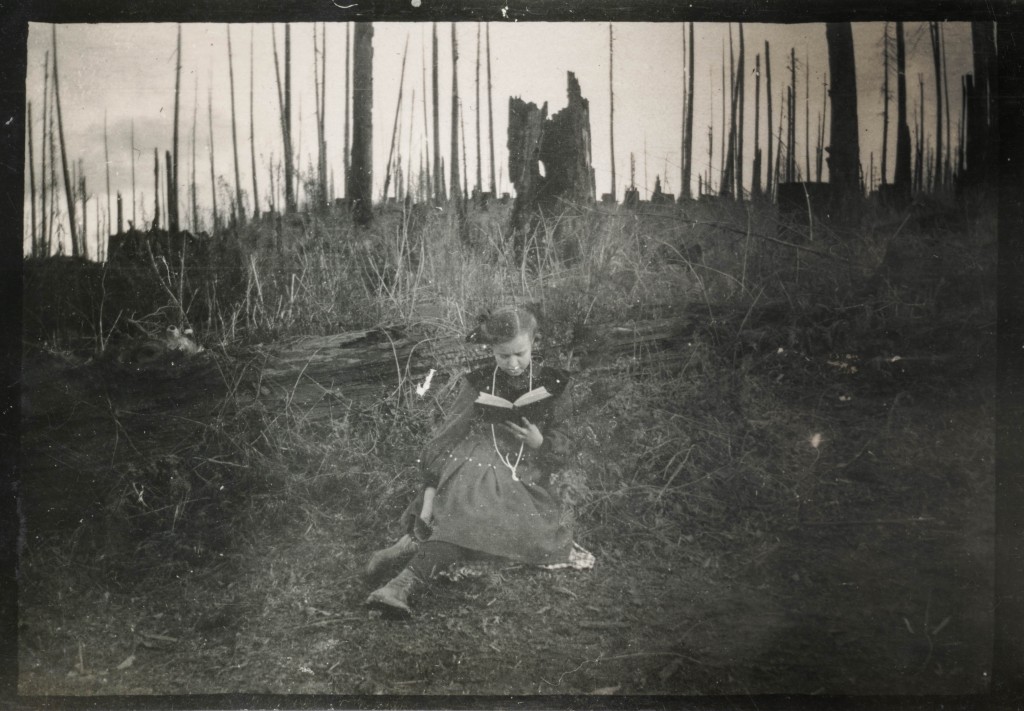
Little girl reading a book in a burned-out forest by simpleinsomnia on Flickr https://creativecommons.org/licenses/by/2.0/
To be utterly straightforward, I want more readers. Continue reading
…holds the treasure you seek. (Joseph Campbell)
People ask me why I choose to write for younger readers. Apart for the wonderful freedom on offer, (which I have posted about here) there is also the company of fellow children’s writers.

I belong to SCBWI-BI. The lovely Kathy Evans talks about reasons to join here. I would add more to her celebratory post. It’s warm-hearted people like all of Chi-SCBWI, and Candy Gourlay and Nick Cross and Nicky Schmidt and…and…and…far too many to mention that I need.
Some of the stuff I do frightens me.
I’m going into parts of my self that are dark and hidden and oppressive.
I really appreciate my support team standing at the surface, cracking jokes, willing me to come back safely, egging me on to go further. All the messages about my recent successes have astonished and delighted me.( A bit of a sugar rush, to be honest.) It may well be that other writers are equally close-knit – but I know I can rely on this lot.
Thank you fellow children’s writers- and I promise to hold the rope while you go exploring.
 The viva voce for my MA in Creative Writing was on Monday. I have passed ( thanks to superb tuition from Greg Mosse) – and I am immediately wondering which subset in the Venn diagram of authors I should inhabit.
I’ve been asked to consider writing for adults. Straight off I flinch at that. I will admit to an entire Harry Ramsden’s on my shoulder about the status of children’s writers. It is compounded of my experience as a teacher that your rank is in direct proportion to the age of the children taught; the same impulse that made the ‘Children’s Writing IS a proper job’ badge sell out so quickly in November 2010, and Martin Amis’s remarks in February about brain injury and writing for children. The subtext is that writing for adults is somehow better, cleverer, more valuable.
Well, I’m with John Dougherty:
Don’t worry Martin. We can’t all be imaginative and versatile.
One of the things I admire most about the literature published for young people is the sheer range and breadth of ideas. Big ideas, written for people who will not be blinded by the effulgent beauty of your prose nor give one microfortnight of attention to reviews by your literary chums.
It is notable that David Almond (a literary hero to me) found a sense of liberation in writing for the young. I am put in mind of this concept:
Australian Aborigines say that the big stories—the stories worth telling and retelling, the ones in which you may find the meaning of your life—are forever stalking the right teller, sniffing and tracking like predators hunting their prey in the bush.
Robert Moss, Dreamgates
Quite simply, I believe young people are more likely to be receptive to the stories following me about and asking to be told than adults. And I bother to write because of my belief in those same young people, and what stories are for.
Every word written, every sentence, every story, no matter how dark the story itself might seem, is an act of optimism and hope, a stay against the forces of destruction.
David Almond, Hans Christian Anderson Award acceptance speech
You might well wonder. Why would any sane person face rejection after rejection, hours of work for an income of maybe £5k, and people asking ‘so what’s your proper job?’ or ‘are you the next JK Rowling?’ One answer, of course, is that children’s writers and illustrators are not sane!
A recent SCBWI group topic set by Candy Gourlay was “Authors and Illustrators in Waiting … How are you coping?” Paul Morton of Hot Frog Graphics came up with an excellent response:
‘ keep at it and keep believing’
I rather thought that could well be a SCBWI motto. It also set me to thinking about optimism in general.
It is hope that that inspires people to make New Year’s resolutions. Although we can be a little dismissive of such clichéd vows, we have to admire and learn from those who do make it through the grotty days of January and February sticking to their promises. The tough nuts who carry on cycling to the gym, the reformed smokers, the impressive slimmers – each deserves our admiration. Indeed, any sort of promise or vow is predicated on hope: I believe it is another reason why we love weddings, and why a baby brings joy.
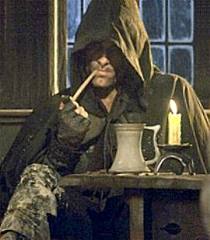 Sometimes the sheer difficulty of attaining your dream can make hope shrivel. It seems hidden, and keeping going seems more a case of dogged determination than optimism. Tolkien had Aragorn hidden and named Estel (Hope) as a child. He made the future king of Gondor wander the wilderness for the best part of sixty years. He suffers moments of terrible self -doubt: “An ill fate is on me this day, and all that I do goes amiss” – but his stubborn determination and belief in good over evil end in triumph.
It is also hope that makes campaigners speak up for the things that matter to them: campaigner Steve Ross and children’s writer Michael Morpurgo bother to call on the government to “stand up” for libraries on Radio 4’s “You and Yours” as part of the show’s debate into library closures. Why Kate Mosse, Philip Pulman and Alan Gibbons keep banging on about this too – because they have hope. And it was why anti-slavery campaigner Olaudah Equiano wrote:
I hope to have the satisfaction of seeing the renovation of liberty and justice, resting on the British government, to vindicate the honour of our common nature.
Just as well something else other than the world’s ills came out of Pandora’s Box.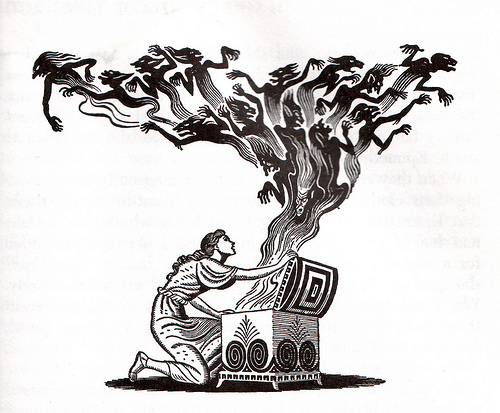
 First off, let me not claim any form of originality. It all probably started with my fab friend Dave Cousin’s Festive Fifteen (well worth a look) – which then inspired the lovely Candy Gourlay. She wrote more about the longer term influences on her work – and so did the inspiring Keren David. Another couple of my favourite blogsters took up the baton – Nicky Schmidt and Kathryn Evans ( just because they’re yummy and my friends doesn’t mean I’d link unless they had something worth saying!)
My slant comes from a quotation passed round the British SCBWI yahoo group – courtesy of the aforementioned Candy Gourlay:
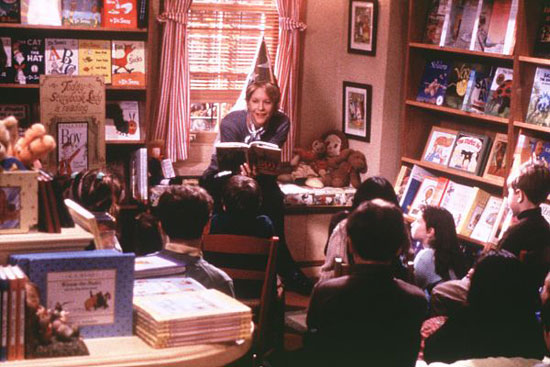
In the movie You’ve Got Mail, the Meg Ryan character sums it up beautifully when she explained what her mum, an independent bookseller vs a discounting chain did:
“It wasn’t that she was just selling books, she was helping people become who they were going to be. When you read a book as a child, it becomes part of your identity in a way that no other reading does.”
So I had a good think about ten books that could make me the writer I aspire to be.
What would you like to suffuse from the books you love into the books you write?

If you feel as strongly about this as I do you might want to blog and tweet about the decision, using #bookgifting and @booktrust and @savebookstart.
Please support Booktrust . Perhaps you might email Booktrust on bookgifting@booktrust.org.uk offering support. You could write to Mr Gove and to your local MP. Michael Gove changed his mind about school sport funding.
Read Keren David’s blog for an impassionerd article on this subject too.
So why did what should have been a brilliant day for any normal person leave me in tears?
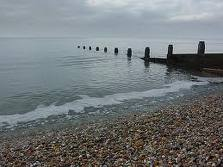
Lovely weather and a barbecue on the beach with a tripod cooking apparatus by Heath Robinson out of Bewitched! Delightful people: Anita Loughrey, Kathryn Evans and Candy Gourlay and then Hanna the Hungarian, plus a batch of assorted great kids. Even a bit of a splosh in the rather refreshing sea. Couldn’t fault it. So how come I felt so low?
The usual suspects: my innate sense of inadequacy and general patheticness. ( Told you you’d want to slap me.)
These are real people persons – oozing genuine warmth and affection for their children. Something of a contrast to my parenting skills. Gorgeous high-achieving but unspoiled offspring. I try to brazen it out about my lot – not an ‘A’ level among them and me a teacher. Ho ho ho. No one is amused.
I’m also shaken by their general talent and interestingness:
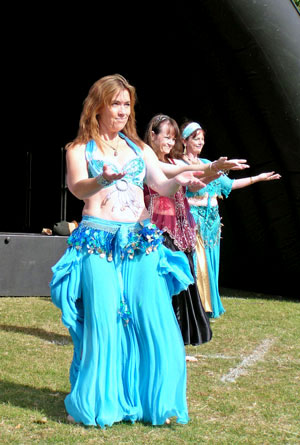
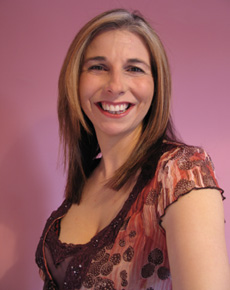
Me. Mmmm. I have life on a plate and I still can’t get my act together.
I feel at sea with people – I don’t get out very often. I try to tell a tale in ordinary conversation but it falls away. People talk about something else because I’m boring. Or I miss the moment and an anecdote that might have been relevant becomes pointless. I try to be assertive: I just sound rude and pushy. What chance have I got at self-promotion in a hostile or indifferent marketplace when I can’t manage to get myself across in such a supportive environment?
Let me be quite clear I am not fishing for compliments, dear friends who read this. (Though, if you insist…) I’m just attempting to be honest in the faint hopes it might help
‘The proper study of mankind is man’, Alexander Pope wrote. Well, I think I might just have a CSE in it. Not brilliant when character is all important to a fiction writer. I expect I must be somewhere on the Asperger’s continuum – and so must Eeeyore and Puddleglum.
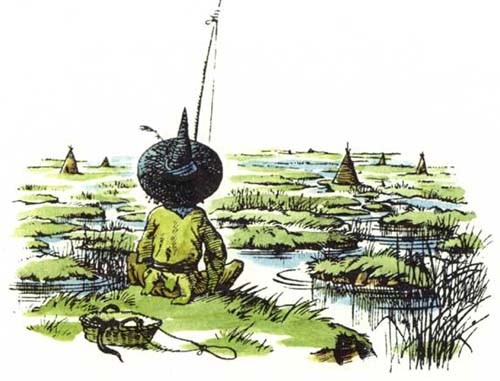
“Speaking as an outsider, what do you make of the human race?” as our Dawn, my best friend, put it.
or How to Get Noticed.
“…a prepossessing personality in an author is a great asset… “How to Get An Agent” by Philippa Milnes-Smith in 2010 A& C Black.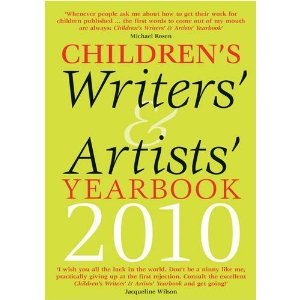
OK seems a good idea. I’d better get one. Let’s start off with interesting interests.
Righto – how about developing a distinctive appearance?

What about me? Perhaps I need to have a remarkable background.
Oh dear. Perhaps I could hide behind other enticements?
I give up. I’ll just have to take a leaf out of all these brilliant people’s books – and just write really, really well. And be myself.